
Ransomware continues to be one of the most disruptive cybersecurity threats facing businesses. While organizations are making progress in strengthening their defenses, the financial and operational consequences of a successful attack remain significant.
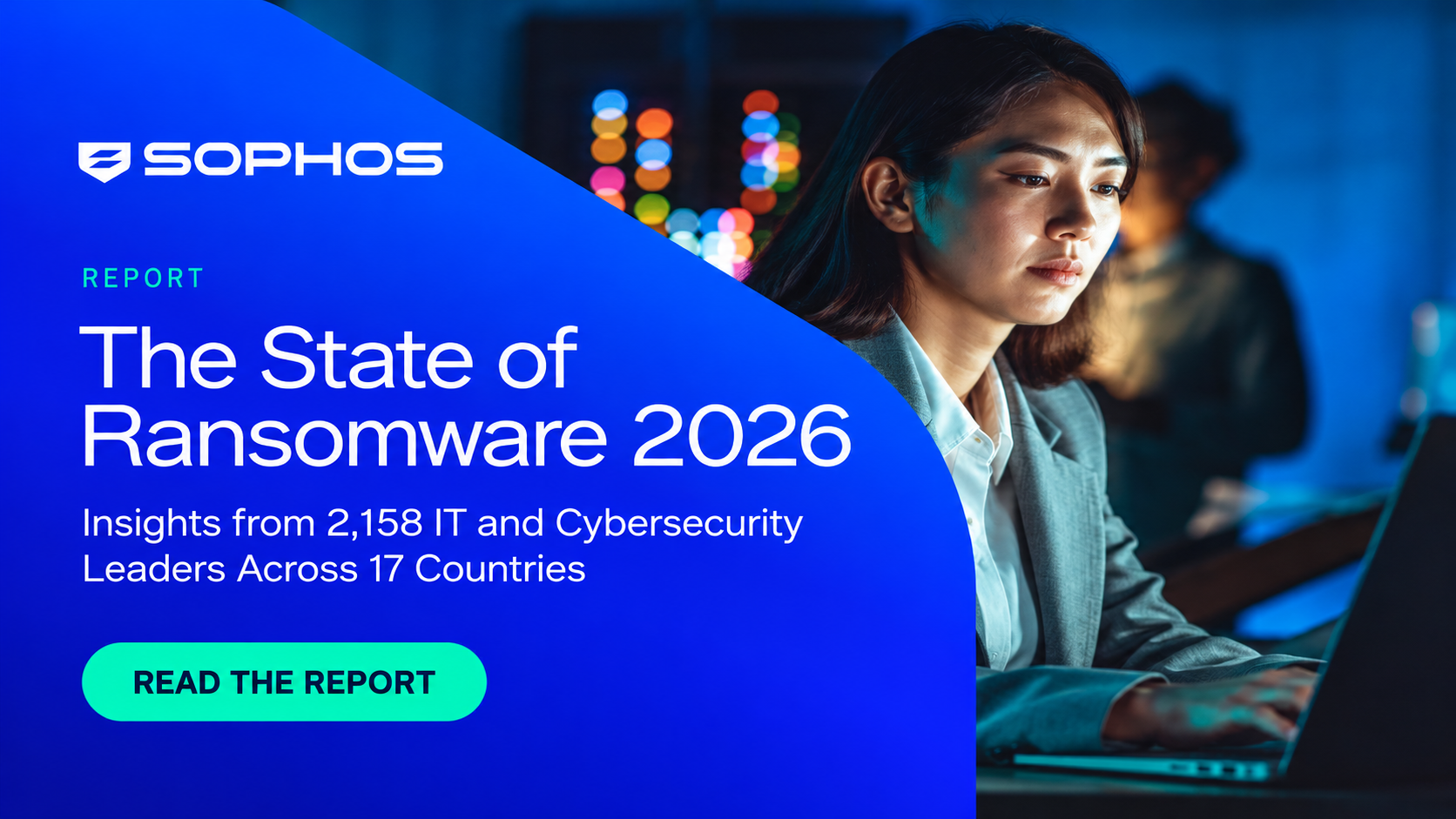
The newly released Sophos State of Ransomware 2026 report provides insight into how ransomware attacks are evolving, what businesses are paying, and which cybersecurity measures are making a difference.
Based on a survey of 2,158 IT and cybersecurity leaders across 17 countries whose organizations experienced ransomware in the previous year, the findings reveal both encouraging improvements and persistent security challenges.
Key Findings from the 2026 Report
1. Ransomware Recovery Costs Average $1.7 Million
The average cost of recovering from a ransomware attack has increased to $1.7 million, an 11% increase compared to the previous year’s report.
Importantly, this figure excludes ransom payments.
Recovery expenses can include:
- Business downtime and lost productivity
- System restoration and data recovery
- IT remediation and incident response
- Hardware and infrastructure replacement
- Lost business opportunities
For small and midsize businesses, even a fraction of these costs can create significant financial strain.
2. Nearly Half of Organizations Still Pay the Ransom
Despite improvements in backup and recovery capabilities, 48% of organizations whose data was encrypted paid a ransom.
The median ransom payment declined from $1 million in the 2025 report to $769,000 in 2026.
Among organizations that disclosed both their ransom demand and payment, 51% paid less than the original demand.
While declining payments are encouraging, paying a ransom does not eliminate the disruption, recovery expenses, or potential consequences of a security breach.
3. Email-Based Threats Are Leading Attack Methods
The report identifies a notable shift in how ransomware attacks begin.
The most frequently reported technical root causes were:
- 26% — Malicious email
- 24% — Phishing
- 23% — Compromised credentials
- 18% — Exploited vulnerabilities
Together, malicious email and phishing accounted for half of the reported ransomware incidents.
These findings reinforce the importance of email security, employee cybersecurity awareness, and strong identity protection.
4. More Than Half of Attacks Successfully Encrypt Data
According to Sophos, 56% of ransomware attacks resulted in data encryption, an increase from 50% in the previous year’s report.
Additionally, 16% of attacks involved both data encryption and theft.
This combination creates additional risks for businesses, as attackers may attempt to extort victims by threatening to expose stolen information.
5. Reliable Backups Are Making a Difference
One encouraging finding is the improvement in backup-based recovery.
66% of organizations whose data was encrypted used backups to recover, compared to 54% in the 2025 report.
However, having backups alone is not enough.
Businesses should ensure their backup strategies include:
- Automated and regularly monitored backups
- Secure, isolated, or immutable backup storage
- Routine recovery testing
- Documented disaster recovery procedures
- Clearly defined recovery objectives
A properly designed backup and disaster recovery strategy can significantly reduce the operational impact of ransomware.
What These Findings Mean for Your Business
The Sophos report demonstrates that ransomware prevention requires more than a single security product.
Businesses should take a layered approach to cybersecurity that includes:
Advanced Endpoint Protection: Detect and prevent malicious activity before it compromises business systems.
Email Security and Employee Awareness: Reduce exposure to phishing, malicious attachments, and credential theft.
Multi-Factor Authentication: Strengthen account security while ensuring MFA is consistently deployed across critical systems.
Proactive Patch Management: Keep operating systems, applications, and network infrastructure updated to address known vulnerabilities.
Managed Detection and Response: Provide continuous security monitoring and rapid investigation of suspicious activity.
Backup and Disaster Recovery: Maintain reliable recovery options to minimize downtime and protect critical business information.
Is Your Business Prepared for a Ransomware Attack?
Cybersecurity threats continue to evolve, and businesses of every size should periodically evaluate their security posture.
At Absolute Business Solutions, we help businesses strengthen their IT environments through proactive management, layered cybersecurity solutions, and business continuity planning.
Our goal is to help organizations reduce security risks, protect critical information, and maintain reliable business operations.
Don’t wait until a ransomware attack exposes weaknesses in your IT infrastructure.
Request an IT and Cybersecurity Assessment
Read the Full Sophos Report
For additional statistics, industry comparisons, and detailed research findings, explore the complete Sophos State of Ransomware 2026 report.
Explore the Sophos State of Ransomware Report
Source: Sophos, The State of Ransomware 2026. Research conducted by Vanson Bourne in Q1 2026 among 2,158 IT and cybersecurity decision-makers across 17 countries.